My clinical practice is dedicated to oral surgery, implantology and oral rehabilitation, with a particular focus on complex cases and atrophic jaws.
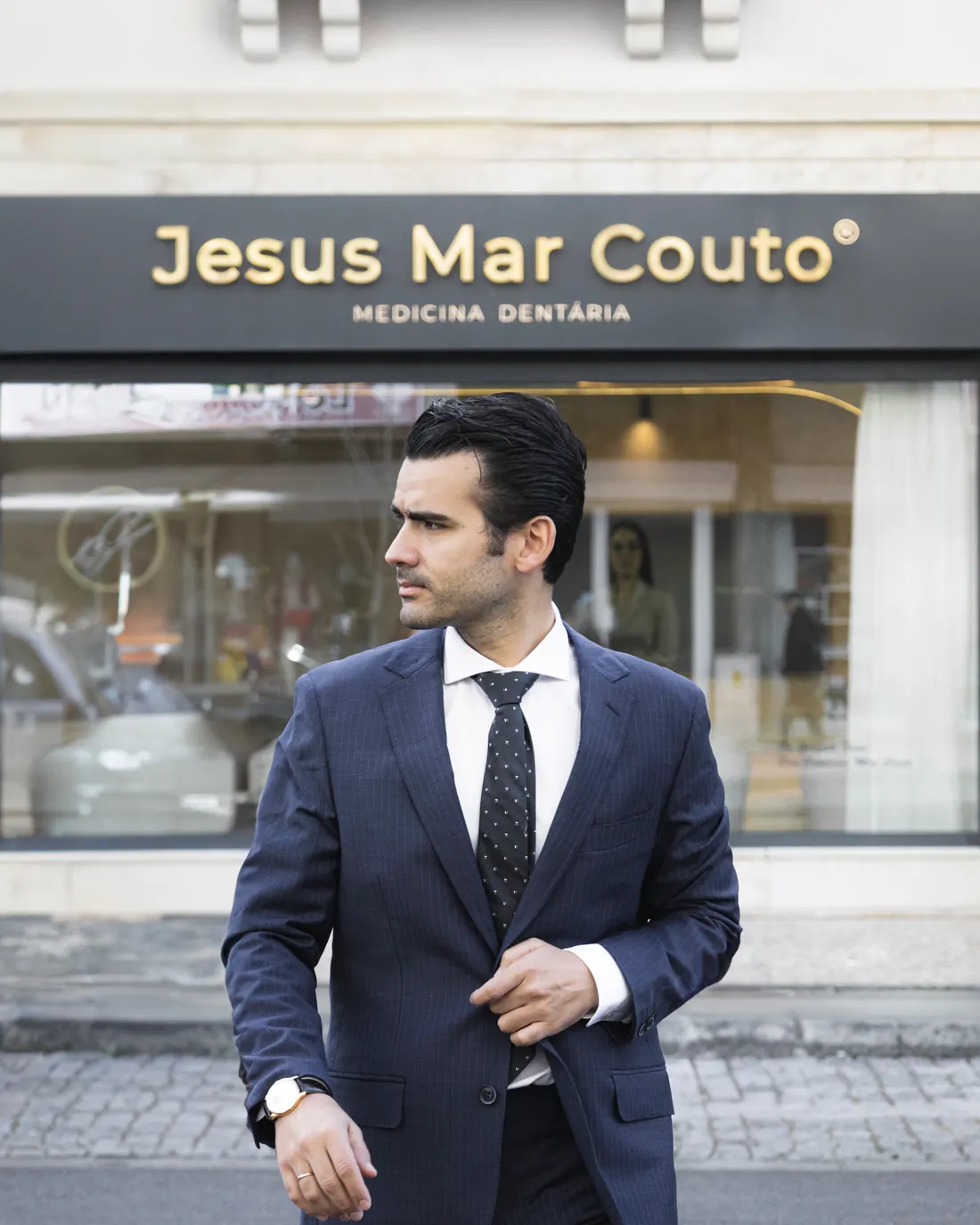
Before dentistry
I competed in sport for more than twenty years. I ran athletics at the highest competitive level, in middle-distance and long-distance events, representing several clubs in the national first division and the national athletics team, at the European Cross Country Championships held in Budapest, in 2012.
Athletics is a sport in which the result is decided in the preparation, over months and years, and not on the day of the race. Nothing that is won is obtained by a short cut, and nothing improves without being measured: it is a discipline made entirely of daily training and record-keeping.
In dentistry it is exactly the same. The outcome of a rehabilitation begins to be determined in the planning, long before there is any surgery — and the ability to do it well is not acquired in a single season. It is built the way a high-level competitive career is built up to the national team: over years, case by case, with many cases planned in detail and with the hours that this demands.
Who comes to me
I see patients from all over the country and from abroad, and I receive complex cases referred by colleagues — both for rehabilitation with veneers and for the placement of implants in situations of severe bone atrophy.
In referred cases, the treatment is planned and carried out by me and my team and, once that work is complete, the patient is referred back to the colleague, so that they can continue to look after them.
A considerable number of the people who come to me arrive after being told that there was no solution for their rehabilitation — whether with veneers or with implants; in the latter case, for lack of bone structure.
What allows me to resolve these cases today are the hundreds of complex cases I have resolved before — many of them cases that had already been given up on.
How I think about cases
Every case has its own particularities — the anatomy, the face, the clinical circumstances of each person. That is why there is no single technique that resolves every case, and I do not have a preferred technique.
There is, rather, a set of techniques to be taken into account: zygomatic, pterygoid and transnasal implants, palatal anchorage, angled implants with bicortical engagement, short implants, custom implants, the various bone regeneration techniques and lateralisation of the inferior alveolar nerve. The choice is made according to two things: the bone structure that is present and the rehabilitation that is to be achieved.
Finding bone support is very important in the planning. More important still is ensuring that this support makes it possible to build a smile that serves the person, with predictability and with durability — because it is that, and not the number of implants, that determines the long-term result.
The decision is made on the basis of a clinical assessment and a three-dimensional radiographic study — a cone beam computed tomography scan, CBCT, also referred to as a 3D X-ray or CT scan, carried out at our clinics.
We are sometimes asked whether a panoramic radiograph is not enough. Although it is a good examination, and gives an overall view of the situation, it is only a two-dimensional projection: it does not quantify bone volume or locate the anatomical structures. It is from the three-dimensional study that I know, before going into theatre, where each implant will sit.
Why we work in a digital workflow in dentistry
We work in a fully digital workflow for four concrete reasons: it is more precise, it is more predictable, it is faster and it is more comfortable for the patient.
In practice, this means digitising instead of estimating. Intraoral scanners, a facial scanner, photogrammetry and recording of the mandibular movements bring together the information on the case, and it is on that data that the plan is built. The surgery is then carried out in a guided or navigated manner, so as to follow exactly what was planned and to keep the procedure as minimally invasive as possible — which is directly reflected in the post-operative period and in recovery.
Digital execution also allows production in our own dental laboratory, in-house and integrated with the clinic. It means direct communication with the person making the rehabilitation, rather than communicating in writing with someone who has never seen the patient.
And it means being able to sit beside the technician and adjust, on screen, the details of the smile I am looking at in the patient's mouth. Often it is the patient who comes to the laboratory to follow the changes, until we arrive at the result they had in mind. For the person being treated, it translates into fewer visits, less treatment time and greater predictability about what they are going to receive.
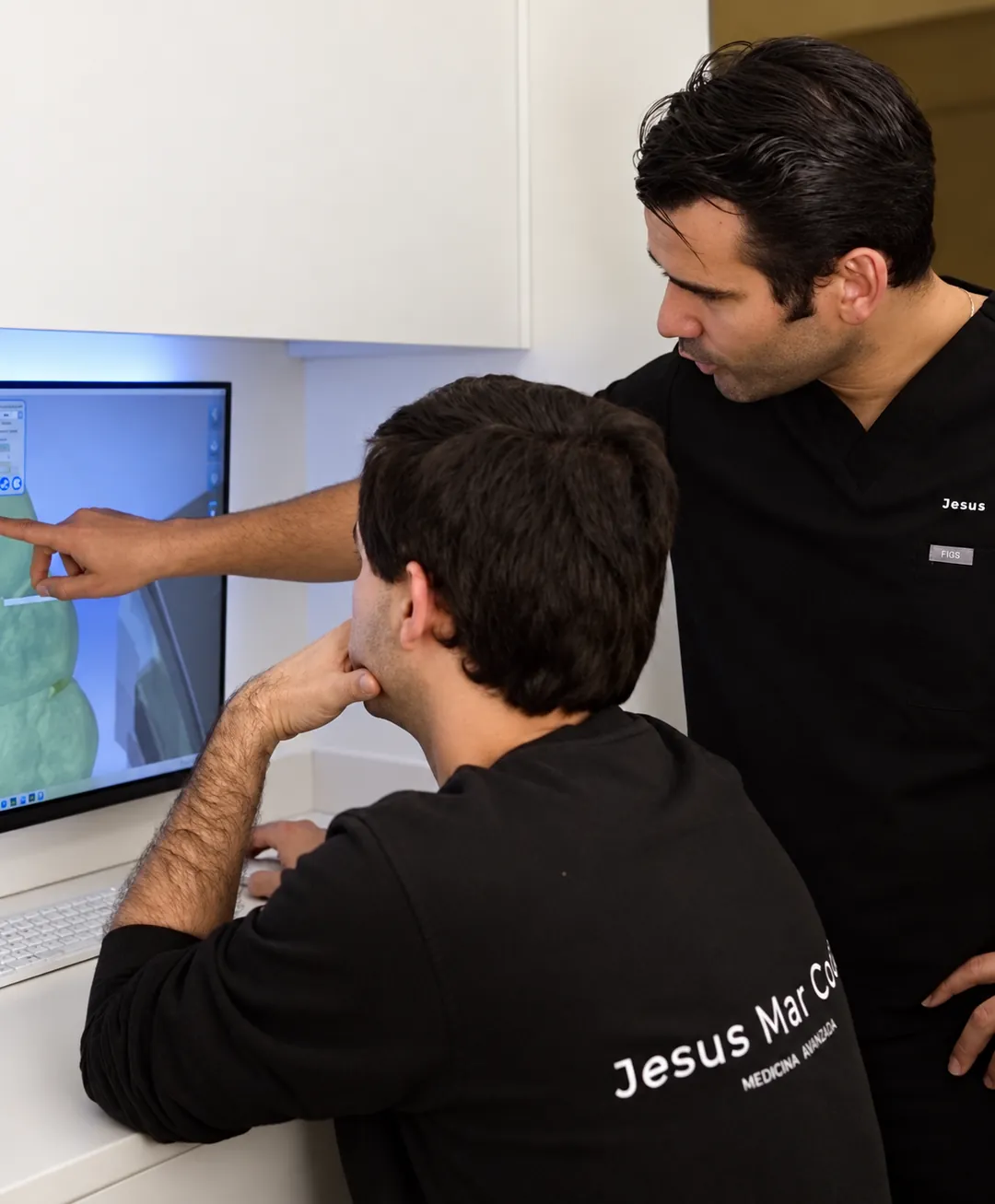
In addition, the clinics have their own radiology equipment, including CBCT and a panoramic unit. Anyone who arrives without these examinations can have them taken on site, at the same assessment consultation.
Curriculum in brief
- CEO of Jesus Mar Couto
- Master's degree in DentistryUniversidade Católica Portuguesa · completed in 2015
- Postgraduate diploma in Oral SurgeryUniversidade Católica Portuguesa
- Postgraduate diploma in Periodontology and Clinical Peri-ImplantologyCESPU
- Postgraduate diploma in Healthcare ManagementUniversidade Católica Portuguesa · Porto Business School
- Master in Periodontology and Implant TherapyHürzeler/Zuhr Academy — Munich, Germany
- Training in Zygomatic Implant SurgeryFaculty of Medicine and Health Sciences, University of Barcelona
- Attendance at various courses in oral rehabilitation and in digital dentistry, including ceramic layering and CAD/CAM design and production.
- Practice dedicated to implant surgery and oral rehabilitation, with the digital workflow carried out entirely at the clinic, from planning to prosthetic production.

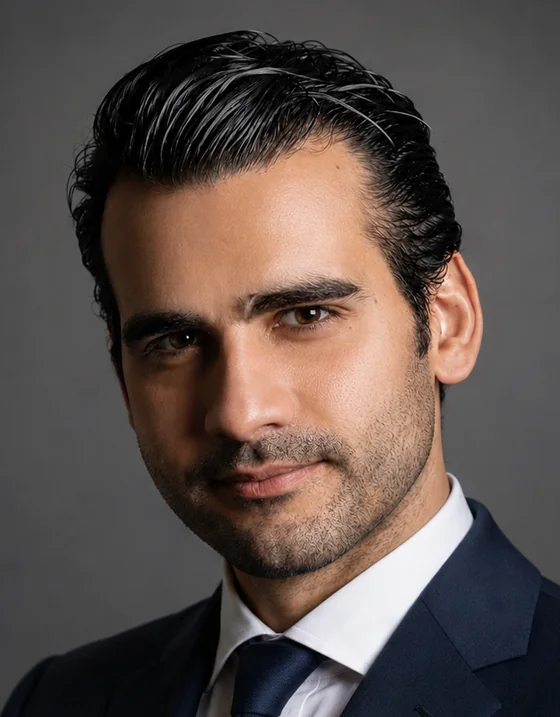
Dr. Gonçalo Jesus is a dentist, registered with the Portuguese Dental Association (Ordem dos Médicos Dentistas) under professional licence no. 10234, and CEO of Jesus Mar Couto, a dental clinic with practices in Aveiro and in Faíscas. He completed his master's degree in dentistry at the Universidade Católica Portuguesa and holds postgraduate diplomas in Oral Surgery from the same university, in Periodontology and Clinical Peri-Implantology from CESPU and in Healthcare Management from the Universidade Católica Portuguesa / Porto Business School. He has also taken international courses, among them the Master in Periodontology and Implant Therapy at the Hürzeler/Zuhr Academy, in Munich, and the training in Zygomatic Implant Surgery at the University of Barcelona. His clinical practice is dedicated to oral surgery, implantology and oral rehabilitation, with a particular focus on complex cases, atrophic jaws and cases referred by colleagues. Before dentistry he competed in sport at a high level for more than twenty years, having represented the national team at the European Cross Country Championships in 2012.